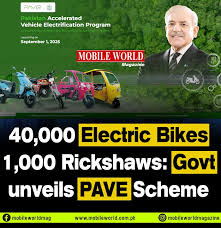

Description of A Guide to Electric Cars in Pakistan
A Guide to Electric Cars in Pakistan are steadily gaining traction in Pakistan. While the transition from internal-combustion vehicles won’t happen overnight, there is growing momentum and meaningful opportunity. If you’re considering switching to an electric car—or simply want to understand the landscape—this guide covers key aspects: what the market looks like, benefits & challenges, how to choose a model, infrastructure, costs, and future outlook.
1. Why Electric Cars? The Case for Pakistan
-
Fuel dependence: Pakistan relies heavily on imported petroleum, which adds upward pressure on costs and exposes drivers to volatility. EVs offer lower running costs as electricity (in many cases) is cheaper per km than petrol or diesel.
-
Environmental & energy goals: The government is conscious of air‐pollution, fossil‐fuel reliance and climate goals. For instance, there are published targets of increasing EV share of new registrations.
-
Technological progress & imports: More EV models are being imported into Pakistan, and some local assembly is planned. This increases choice and may improve service/parts in future. Brandcar
2. Current Market Situation in Pakistan
Models and Price Ranges
-
Entry‐level EVs (compact city use) in Pakistan can start in the range of PKR 3.5–4.5 million or so.
-
Mid‐sized SUVs/sedans: more capable batteries, better range → higher price.
-
Premium luxury EVs (imported) can cost much more.
Availability & Adoption
-
Currently, EVs make up a very small share of total vehicle registrations in Pakistan.
-
Charging infrastructure remains limited (especially outside major cities).
Policy & Incentives
-
The government has introduced favourable import duty and tax policies for EVs to support uptake.
-
Aspirational targets exist (for example, aiming for 30 % of new vehicle sales being electric by 2030).
3. Benefits of Owning an Electric Car
-
Lower running costs: With fewer moving parts, no fuel in the conventional sense, and favourable electricity tariffs (especially if you charge at home), the operational cost of EVs can be significantly lower over time.
-
Less noise and smoother drive: EVs deliver instant torque, and many drivers enjoy the smoother, quieter experience.
-
Positive environmental impact: Reduced tail‐pipe emissions; aligned with broader goals of reducing fossil‐fuel use.
-
Growing brand & model choice: As more models enter the market, you have more options to match your budget, size‐requirements and lifestyle. Brandcar
4. Challenges & Things to Watch
-
High upfront cost: While running costs may be lower, the initial purchase price of EVs (especially imported ones) is still significantly higher than many conventional cars.
-
Limited charging infrastructure: Especially outside major urban areas. If you travel long distances frequently, you need to plan carefully.
-
Range anxiety and battery concerns: While range is improving, for some models and in certain conditions, the effective usable range can be lower. Also, battery health, warranty and after‐sales networks are important.
-
Electric grid & power reliability: Pakistan’s grid has its challenges (load‐shedding, instability) in some regions; if your home charging depends on unstable supply, that adds a layer of risk. Some observers highlight that electrification must go hand‐in‐hand with renewable/clean energy growth.
-
Service / spare parts / resale value: Because EV penetration is still small, local service networks and spare‐parts stocks may be limited compared with conventional cars. Resale value might also be less certain until the market matures. Brandcar
5. How to Choose an EV in Pakistan: Checklist
Here are some criteria and questions to use when evaluating an electric car purchase:
-
Range: How many kms does it offer per charge under real‐world Pakistani conditions? Consider city vs highway.
-
Charging options:
-
Can you charge at home (garage / parking area)?
-
What is the public charging network in your area or on routes you travel frequently?
-
Is fast‐charging supported?
-
-
Battery warranty & service network: What warranty does the manufacturer provide on the battery? How many service centres exist locally?
-
Total cost of ownership: Beyond purchase price, estimate how long till you “break even” compared to a petrol/diesel car: fuel savings, maintenance savings, any incentives.
-
Model & import status: Is the model officially imported or grey‐market? Official imports tend to have better parts support.
-
Resale market: What is the resale value for‐that model? Is there demand for it?
-
Local conditions: If you live in a region with frequent power cuts, if charging options are limited, if your commute is long and charging opportunities scarce — these factors matter.
-
Fit for your usage: If you primarily do city commuting, an EV is more practical than if you do long rural highway trips where charging stations are scarce. Brandcar
6. Infrastructure & Charging: What You Should Know
-
Home charging is the most convenient form of charging for many EV owners. If you have a dedicated parking spot and install a home charger (assuming electrical supply is reliable), that gives great convenience.
-
Public chargers: The number of charging stations is increasing in major cities and on major highways, but still relatively limited.
-
Fast‐charging vs slow/AC charging: Many public chargers are slower (AC) which means longer dwell time. For long‐distance travel, access to DC fast‐chargers is a plus (but still rare).
-
Electricity tariff and grid stability: The cost of charging depends on your local electricity tariff and availability. If you use rooftop solar or off‐peak tariffs, that can reduce cost further. However, if the grid is unreliable, that reduces convenience. Some policy discussions emphasise that electrification must align with clean & reliable power generation.
7. Cost Analysis: Purchase vs Running Costs
-
Up‐front: EVs cost more initially (battery, import duties, new technology). But policy incentives may reduce this gap somewhat.
-
Running:
-
Fuel (petrol/diesel) savings: Depending on your driving volume, EVs often cost much less per km. For example, one market commentary notes many owners save large amounts monthly.
-
Maintenance: Fewer moving parts (no oil changes, fewer filters, fewer mechanical components) can reduce maintenance cost.
-
-
Total Cost of Ownership (TCO): If you plan to keep the car for many years, the savings over time can offset the higher initial cost. But you need to factor in battery degradation, possible replacement, and resale value.
-
Incentives: Reduced import duties, tax breaks, subsidised electricity for charging may provide additional savings. Brandcar
8. Future Outlook for Pakistan’s EV Market
-
The trend is positive: More global EV brands and local assemblers are targeting Pakistan. Some local production partnerships are being planned.
-
Charging and infrastructure expansion is expected to accelerate, especially along major highways and urban centres.
-
As technology improves (battery capacity, cost per kWh falls, range increases) and scale increases, EVs are likely to become more affordable and practical for more segments of the market.
-
Policy environment: Government support (tax & import duty incentives) will play a key role in accelerating adoption.
-
Risks / uncertainties remain: grid reliability, business models for charging infrastructure, consumer awareness & trust, local maintenance & spare parts ecosystem. Brandcar
9. Final Thoughts
If you’re in Pakistan and considering an electric car, here are some takeaway recommendations:
-
If your usage is primarily urban/commute and you have reliable home‐charging infrastructure, an EV is increasingly viable and can save you money in the long run.
-
If you do frequent long-distance highway driving (especially outside major charger‐density areas), then carefully evaluate the charging network and time‐costs involved. It might still work, but requires more planning.
-
Do your homework: Check battery warranty, service network, actual range (not just claimed), charging availability.
-
Future-proof your decision: Consider how easy it will be to service and resell the car in 3–5 years; consider models with more global support.
-
Budget‐wise, remember the initial cost is higher, but the economy of running the car is where much of the value lies.
-
Keep an eye on incentives and policy changes: These can affect imported EV pricing, duties, and charging tariffs—making a difference to your total cost.
In short: Electric cars in Pakistan are no longer some distant future—they are here, the ecosystem is evolving, and for the right user they make a lot of sense. The road ahead isn’t without obstacles—but with the right approach, your move to an EV can be a smart and forward‐looking decision. Visit Now


